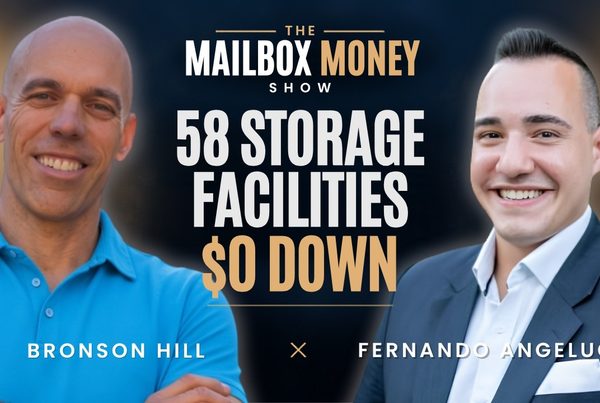
In this episode of The Mailbox Money Show, host Bronson Hill sits down with a powerhouse panel of tax, real estate, and securities experts for a no-hype conversation on advanced strategies that help investors keep more of what they earn.
They dig into practical 1031 exchange tactics (including DSTs and 721 upREITs), Opportunity Zones 1.0 and the new permanent 2.0 rules, creative ways to unlock home equity while combining Section 121 exclusions with exchanges, short-term rental and real estate professional status plays, and the critical securities-law compliance steps that protect both sponsors and passive investors.
YouTube
Scott Saunders – Money Mastery Coach at Wealth Outside Wall Street and one of the most experienced 1031 exchange specialists in the country.
Ashley Tison – Founder of OZ Pros and a leading Opportunity Zone expert who has helped set up nearly 2,000 qualified opportunity funds.
Bethany Laflam – Securities attorney at Premier Law Group and founder of Rev, focused on legal-first deal structuring and compliance for Main Street operators and capital raisers.
Tune in for clear takeaways you can use to build more tax-efficient, passive cash flow.
Spotify
Get my book: Fire Yourself
Full Transcript:
Bronson Hill: All right, so if we have not met, my name is Bronson Hill. I’m the CEO of Bronson Equity. We do private equity and real estate deals.
We also do events like this. Every two weeks, we’re doing an educational event like this. And we just want to really try to add value to the space. So keep the chat going there.
I’m going to go ahead and share a video with you about what we’re going to do tonight. It’s about a one minute video, and then we’re going to jump in and start. So just sit tight for just a sec.
I’ll get this video cued up, and we’re going to start with our event, which is What The IRS Doesn’t Want Investors To Know And What To Do About It. So let’s jump in here.
Welcome. So great to have you here. If you’re here to develop cash flow that does not depend on your day job, then you’re in the right room. I’m Bronson Hill, the host of the Mailbox Money Show and the bestselling author of Fire Yourself.
And I’ve spent years helping investors create passive wealth outside of Wall Street. Tonight is about clarity, practical strategies, straight talk with experienced operators and a community of people serious about tax efficient cash flow. Inside Bronson Equity, you’ll find education and a curated pipeline from real estate deals to diversified tax-advanced strategies, plus a trusted process to evaluate what fits your goals.
No hype, just honest conversations and access to quality ideas. My goal is to help you make confident, well-informed decisions so your money works even when you’re not. So go to bronsonequity.com/join to join the investor club, get priority briefings, monthly insights and first look invites. It only takes about 10 seconds. Thanks for being here. Now, let’s jump into tonight’s expert panel.
All right, so let’s jump in here. I’ll go back.
I’m excited, guys. So let’s welcome our panelists up here.
We’ve got a good crowd in the house. I’m going to welcome them up to the stage and give them an intro. So go ahead and come on up to the stage, guys, and we’ll get crack in here.
So awesome. In the house today, we’ve got Scott Saunders, who is the money mastery coach with Wealth Outside Wall Street. So really excited to have you today, Scott.
Welcome. I know you’re actually over in Italy. So he comes coming in the middle of the night.
He’s so committed to be here. So love that. Welcome, brother.
Scott Saunders: See you.
Bronson Hill: Awesome. Good to have you. Next, we have Ashley Tyson from the founder of OZ Pros.
Welcome, Ashley. How’s it going?
Ashley Tison: Ah, great. Appreciate you having me on tonight.
Bronson Hill: Awesome. Love it. Love your background. You had a nice cowboy theme going on there. That’s great.
And then we’ve got Bethany LaFlam, who’s the security’s attorney at Premier Law Group. What’s up, Bethany?
Bethany LaFlam: Hey, good to see you.
Bronson Hill: Good to see you, too. So I’m excited. We’re going to have a good conversation tonight.
I wanted to talk a bit before we get into it. We have each of you have kind of a diverse background. So I want to see if it could take 60 seconds and just talk about kind of what each of you are working on.
So less on like, hey, this is a background. I went to this school or whatever. But just more like, hey, here’s what I’m doing with investors now. And so we kind of know who’s in the room.
We’ll kind of set the table. So let’s start with Scott and we’ll work our way around here.
Scott Saunders: Yeah, great. My background is in 1031 exchanges. I’ve been doing that for 37 years. So expertise there.
Today, I’m helping people with wealth outside Wall Street, where we help people show how to become financially free in 10 years or less. And we use a lot of tax strategies and proper entities to get that done.
So that’s where I’m putting my time today. But I’ve got the background on the 1031 exchange side of things.
Bronson Hill: I love it. You’ve done over 100,000 1031s. Is that right?
Scott Saunders: I have. I’ve done when you’ve been when you’ve been doing since 1988, you get a few deals in.
Bronson Hill: Well, I think I don’t think I’ve met anybody that’s done more 1030. That’s an insane amount of 1031. So I don’t know.
You might be the one of the probably the most in the country, I’d imagine. Right.
Scott Saunders: I’m up there, yeah.
Bronson Hill: That’s awesome. Good to have you, brother. Welcome.
Thanks for coming in. All right. Let’s go to Ashley.
Give a little background on yourself, what you’re working on.
Ashley Tison: I thought that we were doing good because we’re approaching 2000 qualified opportunity funds set up, which I think is hands down more than anybody else in the country. But, dude, we’re not even sniffing. I mean, 100,000.
That’s insane. It’s safe. But we were all about bringing opportunity zones to Main Street America.
And helping folks that have either invested into opportunity zones or who have a capital gain and are looking at opportunity zones, understand them and actually do them. Whether that’s through a captive opportunity fund or understanding going into a professionally managed fund.
Right now we are specifically helping people who have made an investment with the tax cliff that cometh December 31st of 2026. And helping them devise alternative strategies about how they can reduce that tax using some parameters inside of the OZ code. Also other types of investments that they can make in order to bring that tax bill down.
And so that’s what are literally what we’re doing day in, day out. Just trying to get through. And it’s probably about one hundred and fifty billion dollars worth of cash that’s gone into OZ’s.
And we’re going to be busy third and fourth quarter. So we’re trying to get the word out to people. Hey, man, don’t don’t wait till then, because we’re not going to be able to get ahold of us. So let’s get it going now.
Bronson Hill: Yeah, I love that. That’s great. Opportunity zone, super exciting.
Want to hear more about that? And you said it’s really easy to start an opportunity zone. So we’ll talk about how easy it is.
I just put a new poll in the chat here. We’re going to do some polls here. P-O-L-L, polls on, I put in who are you here to see.
So we’re going to rate it as a popularity contest. If you haven’t found that, find that little poll on your phone or on your screen there and check that. And then we’ll share the results of these polls here in a minute.
Bethany LaFlam, talk to us about what you’re working on, what you’re excited about.
Bethany LaFlam: My core focus right now is actually on Rev, my membership community built for Main Street operators to do legal first, business acquisitions, real estate acquisitions, all to scale without selling your soul. Which is a thing I’ve learned. And so I want to help people not do that.
So I’m building the room where people can actually get together and analyze real deals and do it from a legal first lens.
Lots of gurus out there telling you how to acquire businesses and none of them are telling you how to protect them. So that is a big passion of mine. I spend my legal days on the compliance side.
So not as sexy and exciting as the OZ’s or the 1031s. But I’m the one that you come to when you’re doing those to make sure that you stay compliant with the securities laws that are going to be triggered inevitably.
Bronson Hill: I love that. I love that. Well, I think we’re going to do this poll, we’re going to do this panel a little different where I’m going to go kind of ask each of you some specific questions about your business.
I think you guys, we brought you together because you have some diverse things around tax strategy and different things you’re doing or even some of the things on the legal side. So we’ll start with Scott with this one. So talk to us a bit.
You mentioned a little bit about 1031s. I think a lot of people are familiar with 1031s. If you’re not, this is basically how you can do a tax exempt exchange into another property, a light kind or a larger property.
I’m sure there’s a lot more to it. You’ve done a hundred thousand. So obviously you wrote the book on, you have written a book on this, right?
So you’ve got a book on it right now, right? He’s writing a book on it. Love it.
So why don’t you talk about kind of, what kind of what the development you’re seeing in 1031s? And I know it’s changed a little bit where, you know, how are people rolling equity around? Like what are some unique things that you’re seeing?
Just talk about kind of what’s happening in the 1031 space now.
Scott Saunders: Yeah, there’s 1031s are very, very popular, even though the overall activity is probably a little softer. It still is a very popular strategy. Now that the backup is what I actually be talking about doing an opportunity zone.
When we look at what’s going on, there are a few things that are interesting. One thing that’s getting a lot more popular is doing a 1031 exchange into a Delaware statutory trust.
And those have been around for quite a while. They’re referred to as DSTs. That’s kind of the acronym. Years ago, starting in 2002, these were done as tick investments.
But the twist that’s happening right now in the marketplace is really kind of a two-step transaction. So somebody does a 1031 into a DST and a whole big group, about almost half of the industry now, offers an option to exchange into the DST, park the money there for a couple of years. And then later they’ve got the option to do a 721 up read for OP units in a read.
So the advantage here, the takeaway is you go from one asset, you go into something put together by a sponsor, then you go ahead and you’ve got the ability now to get basically a diversified portfolio owned by the read. Instead of having one asset, I’ve got 100 or 200 assets of doing that. So that’s the benefit.
Now there’s a little bit of a downside with that, which is once you do that transaction, you’re stuck with those OP units, which track with read shares. So you don’t have liquidity without triggering a taxable consequence. So that’s a big trend.
That’s kind of a hybrid.
Bronson Hill: But can you break it down one sec? Cause I’m gonna make sure I understand it. Cause I’m sure if I’m having a little trouble understanding, some people are as well.
So you have a tendency to have some equity in a deal, either your deal or somebody else’s deal. You’re rolling that as a 1031 into another project. And then you’re doing something from there into a read?
Scott Saunders: Correct. So let’s go. We want, it’s a very specific type of offering. So it’s a Delaware statutory trust.
Bronson Hill: Okay.
Scott Saunders: So there are about 70 sponsors that offer different variations of these. You can have them in student housing. You can have them in commercial, medical.
So I first go into a Delaware statutory trust where I co-own a commercial building with a bunch of other investors. So I’m in a building now that a bunch of investors own. It could be hundreds of investors.
That’s step one. As I own that, a sponsor puts it together. They’re only for accredited investors.
Now I own that asset. Step two happens two years down the road. Generally two could be three years.
That sponsor gives the investor an opportunity to exchange their DST interest for units in the REIT. So it’s section 721 of the code. That’s a tax deferred transaction.
So they go in step one, do a 1031 and do a DST and hold there for two years. Step two is you’re given the option to elect to take your DST interest, convert it into what are called OP units, essentially the same as REIT shares. Now you own shares of the REIT and it all came out of your one asset that you came out of a couple of years earlier.
Bronson Hill: You’re still tax deferred. That’s great. Awesome, okay, cool.
We’ll come back to that. Ashley, a lot of people are interested, myself included, in Opportunity Zone funds. This has kind of been a big buzz for the last few years.
I know there’s been some changes here as well. Can you talk just kind of an overview of Opportunity Zone funds, both as a passive investor as well as an operator? How hard does it get into these?
Do you really have to hold for 10 years? Just talk a bit about it, please.
Ashley Tison: Yeah, so they were created by the Tax Code and Jobs Act because they needed an expiration date in order to get it through the reconciliation. They had that date tied to December 31st of 2026.
So inside of an Opportunity Zone fund, if you got any kind of capital gain from sale of business, sale of real estate, sale of appreciated baseball cards, it doesn’t matter. You take that within 180 days and you drop it into a qualified Opportunity Fund.
Scott mentioned earlier that this is a way that you can save failed 1031s. So my 180-day clock starts when the QI gives back the money because they failed to identify or close inside of their 180-day 1031 window. We now have a backup to 1031 where you can take that money, drop it into a qualified Opportunity Fund under 1.0. And so until the end of the year, you’re only going to defer your taxes until the end of this year because then it expired.
The One Big Beautiful Bill actually extended the program and made it permanent. So they created what we call Opportunity Zone 2.0. And 2.0 kicks back into where you get a five-year deferral when you put your money into a qualified Opportunity Fund. Then if you hold that investment for five years, you get a 10% reduction when you go to pay the taxes or a 30% reduction if 90% of your assets are in a rural census tract that you’ve invested into.
And so the great thing is is that it can be real estate, but it doesn’t have to be. You can actually invest into an operating business. So to Bethany’s point, for all of those folks starting businesses, you could start a business inside of an Opportunity Zone.
And this is the big kicker of the benefit is that after you’ve held your qualified Opportunity Fund investment for 10 years, you get a step up in basis to fair market value. Which not only eliminates capital gains, but it also eliminates depreciation recapture. So yes, you do have to hold for 10 years, but it’s kind of similar to your Roth IRA. You don’t ask how long do you have to hold your Roth IRA.
You ask how long can I hold my Roth IRA? And the answer in Opportunity Zones is that you get 30 years. And so you get to put this money into a tax-free vehicle, now be able to let that thing grow and let it eat for the next 30 years. Then be able to get a step up in basis to fair market value.
Now you have to transact in order to get that, but you can transact internally. So you could sell it to your trust 30 years out. And once again, step up that basis to fair market value.
So it becomes really powerful in the context of a wealth planning tool, a generational wealth creation tool, and then really how you minimize tax drag and also transactional drag within that conversation.
We’ve got a lot of family offices and people that are trying to think like family offices who are really looking hard at this strategy because they understand that there’s value to be able to get into a good deal. So spend the time and the money really looking at a deal and then put your money into it and let it eat because it’s gonna eat tax-free.
And we know that the eighth wonder of the world is tax-free compound interest. And so that’s what OZs provide.
Bronson Hill: I love it, thanks man, thanks for sharing. Putting some another thing, a question in the chat here, what’s your biggest tax frustration right now? It looks like right now it’s a mix of paying too much in taxes and my CPA doesn’t know the alternative.
So Bethany, let’s talk a bit about, I want you to talk to a couple of different groups here. There are people that are passive investors, there are people that are active investors. Your whole goal is obviously to help people that are raising capital or doing deals not to end up in jail if the deal doesn’t go well or they miscommunicate or misrepresent something.
And also for investors, they don’t wanna invest with somebody who’s a bad actor or does something not above boards. Can you talk about best practices kind of of both? Like what are the things that you would say are important?
Just maybe touch on those.
Bethany LaFlam: Yeah, well as it relates to what we’re talking about here which is the tax savings and the tax benefits. What we see a lot is where the investors are laying the tax tail wag, the securities dog. And what I mean by that is they’re so excited to focus on the tax savings that they’re sort of just looking over the fact that these are securities offerings, right?
And so you’ve got to go to professionals like Ashley and like Scott when you’re doing these kinds of things because otherwise you’re gonna get yourself in trouble. I actually have seen people try to do an opportunity zone offering with templates off the internet. They Google however, you know, Google how to do it and they tell every, it’s a securities offering guys.
Legally it doesn’t necessarily require a lawyer. It requires a lawyer just practically speaking. It requires a lawyer and Ashley happens to be one of those.
So you really, that’s the biggest thing that I would say is if you’re a passive investor check and see if the person you’re putting your money with is cutting corners here because if they’re cutting corners on complaints they’re gonna cut corners somewhere else.
Bronson Hill: Yeah, exactly. That’s really great. And so they say, there’s a saying like how you do one thing is how you do everything, right?
And personal development. So if you see things that are like, oh, this person seems to be cutting corners anywhere, it’s really helpful to notice. And even, you know, like it’s somebody who’s raising capital.
A lot of people that have been investors passively decided they eventually wanna raise capital. That’s where working with someone like you is really valuable in your firm because you help to make sure people do it the right way. So they don’t like, you know, once you start taking money from somebody I always tell people like, make sure you’re talking with an attorney, make sure they got you in the loop because you can’t go back and undo that stuff once you’ve taken capital and things.
Bethany LaFlam: And you don’t want a generalist when it comes to securities loss. That is something that’s pretty specific, especially when you’re dealing with ticks and joint ventures because that can bleed into securities real quick if you’re not paying attention.
And if you’ve got somebody who’s not familiar with what the securities triggers are, then you could find yourself with an illegal offering.
Bronson Hill: Yeah, so I’m gonna ask you guys about tax strategy.
Ashley Tison: We were actually talking about that earlier because I think that’s a relevant point. We were talking about this in my group this morning about how in opportunity zones, if you’re doing your own deal, the worst that you could get is back taxes and penalties.
But as soon as you do an offering and you bring somebody else’s money in, now we’re talking about potential jail time if you mess that up because that is criminal. And so to Bethany’s point, you need to make sure that you have a securities attorney that really knows securities law. And then, if you’re gonna do an OZ offering, they really need to know OZ’s as well.
Bronson Hill: That’s right. I love that, yeah. Quick question for you Ashley on that.
How hard is it to set up an OZ offering as an operator or who would wanna set one of those up in opportunity zone?
Ashley Tison: It’s funny is that it’s really not that difficult. So the key thing is, number one, you need a good deal, right? Because you can’t let the tax tail wag the dog like everybody on here talked about.
Number two is that you need to demonstrate that you have your stuff together as a sponsor. Even if you’re a first time sponsor because everybody has to have a first time, right? You need to demonstrate that you’ve done your homework and that you’re really investing into the things that you need to do in order to make that offering work.
So you wanna have a professional pitch deck. You wanna make sure that your underwriting is tight, that you’ve got a pro forma that you can defend, that you understand the ups down sideways of this deal. And then you wanna make sure that you have good counsel relative to walking you through the OZ compliance so that that way you can address questions from your potential investors.
And then if they stump you, you can be like, hey, listen, I’ve got a great person that I can go to. Similarly with your SEC attorney, with the securities attorney, is that you wanna make sure that they know their stuff. That they’re not trying to cut corners with cutting and paste stuff, that they’re really customizing your offering documents to your deal. And that they are then going to either assist you or they’re gonna do it themselves in making sure that you make all of the correct filings. Your SEC Reg D and then also the state blue skies and that you’ve got a process for how you’re gonna do that. Because that’s where people get jammed up. Yeah, I love it.
Bronson Hill: Well, we got some questions coming in. We’ll take these in a little bit. So everybody, please keep those questions coming or hold them until for a few more minutes, we’re gonna jump into it.
But I wanna talk specifically about tax strategies, right? Let’s talk about some tax strategies and takeaways for investors. Obviously, we’re kind of right around them.
We just got kind of past tax time. Some people, a lot of alternative investors to file extensions if you’re like me, because there’s a lot of deals, K1s come late. So what are some things that as far as tax strategy for investors, for real estate, we can talk about real estate professionals, some of the entities you work with, even different things that you’re seeing.
Let’s start with Bethany on this one. We’ll kind of work around the other others on the panel.
Bethany LaFlam: Well, again, I’m not a tax advisor. My big thing is, again, just make sure that when you’re trying to get wherever you’re trying to get your tax advantages, you’re staying compliant and you’re not just sort of cobbling things together to try to get that. Because the thing that I will tell you is that the IRS does communicate with the DOJ, the Department of Justice and the DOJ communicates with the SEC.
If you are doing interesting tax maneuvers and the IRS starts digging, the other agencies can get involved. So everything needs to be buttoned up because once the SEC starts digging, they don’t have to stop. They can keep going until they find something, even if it’s a different deal, even if it’s a different partner, they open up that can of worms and they don’t have to stop, right?
And so there’s not a direct contract between IRS and SEC, but there’s a pretty easy link to get there. If there’s an overly interesting, let’s call it, tax strategy that maybe isn’t fully compliant. So it really does matter.
This isn’t just-
Ashley Tison: Not that we’ve seen any of those.
Bethany LaFlam: Yeah, right. If you want case law, I mean, and unfortunately, for my stuff, usually we’re talking about civil penalties and liabilities, which is like your best case scenario, by the way, because that’s just money.
You start talking about the DOJ and you’re talking jail time, right? Fraud and all kinds of other things. So this is actually serious.
It is something you wanna pay attention to. It’s just not worth whatever savings you potentially could get if you’re looking over your shoulder for the next 10 years, you know.
Bronson Hill: Yeah, thanks for sharing that. Let’s go to you, Scott. I know you shared about 1031s and some of the other stuff.
What are some of the tax strategies that you’re seeing even as a money mastery coach? There’s a lot of things you’re doing.
Can you talk about some of the different options that are kind of developing for tax strategy?
Scott Saunders: We’ve seen particularly the rise in people doing what we call a split treatment transaction. So we’re gonna take one asset that is a rental property and it’s also got a primary residence component. And we see this all over a lot of different applications.
It could be as simple as I have a duplex and one side is rented, one side I live in. So I split it up. I use section 121 tax exclusion on the primary portion than I do in exchange.
But it gets a lot more creative than that. And I think there are a lot of planning opportunities here. I’ll give you an example.
At my own house, I have a three level house. I got a basement, main level, upper level. My entire basement I use for business purpose.
I run my real estate businesses. I have a podcast studio. When I go to sell my primary home, I’m gonna allocate one third of the price to the portion that I’m using for business usage.
I will do an exchange out of my primary residence and buy another investment property on that one third portion. Then I’ll apply section 121 to the main level and the upper level. So the takeaway there is you’ve got a lot of people that are using homes with Airbnb, mother-in-law units.
And they’re not thinking that all that square footage that is rented out, even though it’s in their primary residence qualifies. And then if you flip it around, you’ve got people that own a ranch or a farm worth $2 million. They’ve got a modest farmhouse for 400 grand and 1.6 million in the dirt. You do the same strategy there. You’re gonna break out and allocate for the residence. That’s 121.
So what I see is you can combine the tax codes. Look at how you’re actually using the asset, right? Some of its residents, some of its rental, or some of its a farmer ranch used in business.
And then you can split it up and bifurcate it. Now you take care of two different tax codes. And then the last one I’ll bring up is moving out.
What if I’ve got somebody that had a residence in La Jolla, California? They bought it 30 years ago for 500 grand. Today it’s worth 5 million bucks.
They move out of it. They rent it. So now they’re still eligible for the 121 exclusion.
So they take, if they’re married half a million of 121 exclusion. Then they exchange out four and a half million of, let’s just call it gain, into a bunch of rental properties in a diversified portfolio. So you’re unlocking all that equity that was tied up in a home by converting it into a rental for, it could be as little as a year. Then you unlock that equity, put it into a diversified investment portfolio.
And so you’ve taken that trapped home equity, and now you’ve got it producing cashflow for you and tax advantages by just converting that property from a residence to a rental and repositioning that equity. And we see a lot of people on the West Coast, any market where you’ve had a big increase in appreciation, that could be a real powerful strategy.
Bronson Hill: I love it. Okay, just real quick before we go to Ashley here, just want to look at this last poll here. It looks like active real estate is the most and also some stocks, passive syndications.
So we’ll do a couple more polls here in a minute. Well, let’s, Ashley, why don’t you tell us some more tax strategy tips you can talk specifically about. I know you’re getting some questions about opportunity zones.
You can talk about other types of tax strategy related to that or something different.
Ashley Tison: Yeah, so, I mean, I actually love what Scott’s talking about there with taking equity out of your main residence. And then putting it into something that’s actually going to cashflow. Whether that’s your own real estate that you actively manage or whether that’s potentially with a sponsor where you’re going to be, where you’ve underwritten them and you’ve looked at them and that they’re going to achieve solid positive results for you. I love that model.
And once again, there’s an opportunity to do it via the method that he described. You can also use OZ’s to do that. With OZ’s, having that benefit of being able to come out tax-free after a 10-year hold.
One of the other things that people don’t really focus on and it’s not really advertised a lot, namely because there’s not a whole lot of people that are above the $30 million exemption amount for purposes of the lifetime exemption. But opportunity zones basically walk like a poor man’s irrevocable trust. So when you put your money into an opportunity zone fund deal, because we got a lot of people that are like, well, man, I’m going to have to hold this thing 10 years.
I’m 75. Well, that is perfect because you put your money into the QOF and the amount that goes against your estate is the original investment amount. And then your estate steps into your shoes. So if you’re in year 11 of the hold when you get hit by the golden bus, then your estate steps in, they sell the next year and they’re stepping into the step-up and basis to fair market value.
And it was only original million dollars that you put in that goes against your lifetime exemption. So it becomes powerful in that regard. I love OZs as well because we can stack a lot of stuff too.
So we can use this in the context of an estate plan. We can also use historic tax credits. So we got lots of deals like that.
And then you can also use solar. So we’re actually building boat and RV storage facilities with solar on them. And we’re selling off the tax credits in order to fund the vertical construction.
And so, and sometimes that’s the same people who invest in the underlying dirt that wanna buy the vertical tax credits. Sometimes it’s somebody completely different, but we, and man, this is literally, divine providence that we got introduced, but we made a lead investment out of my fund. So I had to put my money where my mouth was.
I was like, man, you ought to sell stuff that’s outside of the zone and put it into an opportunity zone because it’s gonna be 23.8% better. And so I was looking at this mobile home park that I had and I was like, you know what? I’m selling that thing and I’m starting a fund.
And so I started a fund, we syndicated it. We brought, probably raised three, three and a half million bucks. And we’ve made lead investments into different deals.
One of which being the Puerto Rico deal that I was talking about, which I hope that that thing’s gonna come out, but anyway, we’ll see. But our great deals have been this solar investment into this, it was a tiny house manufacturer that had this integrated solar roof. And he’s like, you know, I actually think that solar is the way to go.
So I helped him raise the balance of the money to get a solar manufacturing line as an opportunity zone business. And they are one of, I don’t know how many there are in the United States, but there’s not many. When they kind of crushed the solar program in the one big beautiful bill, they paved the way for him to basically step into all of this pinup demand for solar tax credits.
And so he’s just cranking them out, these fantastic deals. They did a hundred million dollars of sales last year. They’re trying to do 500 million this year.
And it’s like, man, what a boondoggle that he started this thing as an OZB. And, you know, he’s gonna be able to sell this thing 10 years out and not pay any taxes on it. So I love solar as another tax mitigation strategy.
I also like, and I’m vetting a couple of these right now where there’s a loss allocation in the context of a partnership that’s doing like a, it operates like a hedge fund and they disproportionately allocate you the losses upfront. And then you make your money up over time, right? Relative to the remaining gains.
And so we’re trying to get somebody that really understands how to do diligence like a Wall Street level company. But I kind of like that one as a tax strategy because it could take somebody who has a capital gain and make it so that they really only pay about 10% instead of that 23.8, which would be a huge boon for us because right now, you know, I think the best thing that’s out there is like 65 cents on the dollar, right? In the context of a solar deal.
And that can kind of ebb and flow based upon your individual tax situation.
Bronson Hill: It’s amazing what’s out there as far as tax strategy. Thanks everyone for sharing. I think for me, one of the things I love talking about is the real estate professional strategy and the rep status where I talk about this in my book where I was paying a 25% effective tax rate and I got down to about a 1% in California and just because it would be zero but California is California.
And so, yeah, there’s maybe I need to… Yeah, it was pretty amazing. But so that’s what that is is if you, there’s certain requirements, you can search real estate professional status, IRS or REPS status and there’s certain requirements.
You’ve got to be doing 51% of your work hours of any types of work, 51%, 750 hours or more per year and you have to be a material owner and something you can’t just be passive fully. But that’s, and then you count, you can basically count depreciation against offset, you know, get offset certain types of income with it. So I was able to do that my last couple of years working medical sales.
Not a CPA, but just that’s something I love.
Ashley Tison: I wanted to go to- Now wait, I got a question on that. Yes. What kind of assets were you buying?
Were you doing Airbnb? So SDRs or what?
Bronson Hill: No, I was doing a lot of multifamily syndication with 100% bonus depreciation. So it kind of started to go away and then it came back. And so, if you can get lots of things that have lots of depreciation, you can use that against different types of income, which is really cool.
And it’s for you or your spouse, which is really neat. I’m just going to share this poll real quick. I’m going to end this poll and share it.
So we’ve got, if you cut your tax bill, people say, yes, the first thing is invest more and compound faster. That’s obviously what that is. That’s great.
I want to, before we take some questions here, I want to go and ask each of you a question, basically two things as far as deals. What’s a deal you’re excited about that you’re currently in? It can be in your business personally, and then what’s a deal that you’re not in, but it’s become interesting to you to the point where you’re thinking about getting into it, right?
So talk about something in your business or something personally you’re invested in. And something you’re like, you know, I’m really curious and I’m thinking about making an investment here. Why don’t we start? Who would like to start with that one?
Ashley Tison: I can run with it.
Bronson Hill: Go ahead, please.
Ashley Tison: So I have been fascinated with the massive rapid expansion of AI.
And, you know, like, just it’s mind blowing, like what I’ve been able to accomplish and using it in my own life. You just personally with stuff that I do and have it do. And, you know, I thought that the pro version of chat GPT was awesome.
And then somebody turned me on a Claude and I was like, well, and so, you know, one of the things that we do inside of our work is that we do actual manual compliance. We build somebody’s audit trail because greatest thing about the opportunity zone program is you don’t have to ask permission from anybody, but you better have a damn good audit trail.
So we help people do that.
And literally it’s just birddogging people for documents. One of my clients that I was helping do this, he is in the software development business. And he came to me and he said, hey, listen, I needed something just to be able to understand opportunity zone compliance, just kind of myself. He’s like, would you mind taking a look at this?
And he’s like, and if you’re interested, he’s like, I’d love to build and market this software product. And so he demonstrated it for me and I was like, it was like the first time I used Claude. I was like, dude, that is a game changer.
I was like, please get this done because my team needs it bad. And what he’s done is he has bought a dedicated AI server. So Bethany, this will actually be interesting for you too, is that we are developing our own air gapped AI based upon the recent court cases that said that if you’re doing something out of Claude, all of that is discoverable.
And so we’re gonna do it under the law firm and we’re gonna try to figure out the best way that we can do this so that that way the actual communications because we’re doing this anticipation of litigation, let’s be honest, right? That’s the reason why you’re building an audit trail and we’re gonna do it under the auspices of attorney client privilege so that that way the stuff that they’re doing is now covered. And yeah, so I’m really excited about that and what ultimately shakes out with that.
Bronson Hill: I love that. So that would just real quick, that would mean that anything I would do on Claude and building related to whatever, it was just tying through the attorney and so it wouldn’t be shareable, is that correct?
Ashley Tison: That’s right, because now if it’s just random stuff, you gotta be careful with that because the more general like chats that you have in there, right? But what we would do is we would train it to where you’d have like a regular non-attorney stuff, but then you’d have the attorney one that would be like, oh, we need to bring in counsel on this, right? And you train the AI to do that, to recognize something that’s potentially attorney client privilege.
Now, all of a sudden, one of my counsel or one of the lawyers that Bethany’s gonna put together for me as she scales this law firm, they’re gonna get sucked in and they’re gonna be on that email chain or on that text chain with the AI.
Bronson Hill: Yeah, I love that. That’s great, thanks for sharing. Bethany, what about you?
What’s the thing you’re talking about?
Bethany LaFlam: Yeah, well, I’m obsessed with AI right now, obsessed. And I know that’s weird for lawyers because a lot of lawyers are kind of afraid of it for the same reason that Ashley just said. And so I’m building right now, I’m building AI prompts.
You can actually train your AI to do a hard stop if it starts to look like a attorney client privilege. I’ve done that with contracts, template contracts, not templates, AI prompts that will generate a first draft contract for you without having to pay me $1,200 an hour to do it. So right now we’ve done independent contractor agreements, more specific vendor agreements, AI prompts that use lawyer logic.
So it will take you through the questions I would have asked you so that your output is dependent on your answer. It’s not just a template that you fill in the blanks on, it’s asking you the questions and then it’s generating the output. It’s asking you things like, where are you based?
Let’s talk about choice of law. Let’s talk about things that you don’t even think about when your lawyer is already thinking. So it walks you through that process.
And one of the things that you’ve got to do though, is you’ve got to train your staff and I train the clients within the prompt to say, one is it’s hard stop if it looks like it might trigger securities laws. Stop, do not get a lawyer. Don’t try to do this one on your own, right?
Not yet, we’ll get there, we will. I’m gonna help it get there, but we’re not there yet. But if you’re doing a contract, let’s say less than $100,000 and it’s just an independent contractor agreement, same state, pretty simple.
You don’t have any classification issues for employees, whatever, you can just use this. And you can literally copy and paste my prompt into Claude.
I wouldn’t use Chances PT right now. It’ll get there, but right now I would say use CLUT, the paid version, the $20 a month version. Do make sure you toggle that says that CLUT can’t use your chats for training purposes.
You wanna keep it as private as possible. Never put anything private within it. You’re gonna get yourself a template.
You are gonna take it offline and then you’re gonna fill in the party names. You’re gonna fill in any payment instructions, any addresses, anything that’s identifiable. You wanna pull off of AI.
Ashley Tison: I hate having to do that. I know it’s in the app, but it’s in the app.
Bronson Hill: Is there a chance that all this stuff becomes public or something? That stuff that’s on there, will it become public?
Bethany LaFlam: Well, it could be searchable. So an open AI is searchable by the entire web, right? So that means theoretically, someone could pull your stuff, your proprietary stuff into their search.
And especially if the whatever you’re using can use your stuff for training purposes. It’s training its AI to use your stuff.
Scott Saunders: Your information, yeah.
Bethany LaFlam: You have to tell it not to. The default is it does that. You have to go in and tell it not to.
But the other thing that, I mean, this is great for my business in the short term, which is the courts are like, hey, you better pull a lawyer in. So I have job security for a minute, at least, that if you’re gonna start having these conversations, just pull a lawyer into the room so that it stays privileged. That’s what Ash was talking about is, and you could train your AI to just have it be a hard, like we’re gonna stop talking right now.
It’s almost like Miranda, right? Like just stop talking until you get a lawyer. And then we can continue this conversation.
And then you have the chance to have it be privileged is what that means. So that means if you get into litigation, the other side can’t just say, let’s see all your chats now.
Bronson Hill: Right, it’s not searchable. Scott, what’s one investment you’re excited about and are you’re doing and then one you’re excited about?
Scott Saunders: All right, well, I’m gonna be the contrarian. And I guess I won’t be talking about AI. I’m gonna talk about something old and stodgy.
So a current investment I’m doing, billboards. But it’s a freshened up approach with it. So it’s taking an old billboard, putting up on it electronic on both sides.
So you’re taking an old school asset with just one ad on one side and one on the other side. When you make it electronic, you now get eight ads on one side, eight ads on the other. So I’ve just gone from two times return to a 16x return.
But the way that I like it and you brought up a little bit about rep status and real estate professional, you’ve got that is all personal property eligible for the bonus depreciation. So the ones that I invested in then are billboards. We’ve got a whole bunch of billboards.
So we’ve now converted over to electronic billboards. I’m getting about 80% bonus depreciation on that investment. Now I’ve got an asset that is so easy.
I get rental income off of that, right? And somebody just sits behind a computer, changes the ads. So there’s no tenants to manage and I just changed the rental income.
So I get a boost in rental income. I get the depreciation in day one. So that’s one that I think is really attractive.
The one that I’m not doing now that I think there’s a lot of potential, I think particularly higher earners that are W-2 that are non rep status. They should be looking at taking advantage of the short-term rental strategy to offset the income. So in a year where you’ve got high income, it makes sense to qualify under the short-term rental strategy, which is just a hundred hours and more than anybody else. So you take that asset, you get advantage of that where you can offset other income.
And we’ve actually got a provider we’re working with that the next year, if they get STR one year and starting January 1st of 2027, they’ll run it as a midterm rental where you get extra cashflow. So it’s kind of a hassle to manage actively, but you do that just enough to qualify for the short-term strategy. Then you convert it next year to a midterm rental and you outsource that to a property manager who runs with it.
So I think you get the best of both worlds, massive tax advantages now, and then you’ve got a really high performing high cashflow asset for the future going forward.
Bronson Hill: I love that.
Ashley Tison: Make sure you track those hundred hours. Yeah.
Bronson Hill: Track the hours.
Scott Saunders: You know what? That is the key, right? So it’s just everybody on here, all of these strategies, real estate professional or short-term, you’ve got to contemporaneously document it.
You got to have a real time document it. You can’t come back and go, oops, try and recreate it a few years down the road. So take the time, whether you’re using something like there’s reps tracker, you’re using an app or you use a spreadsheet, track the hours.
And my suggestion is always throw in some extra hours, right? If the IRS challenges you, you want to have enough overage. So even if they say some of them weren’t, you’re covered.
Bronson Hill: Yeah. Two things I’m excited about right now, as far as deals, I love oil and gas right now. Another one is I like a first position debt funds.
Obviously it’s got to be the right type of debt fund. There’s a couple of things we’re invested in now with higher oil prices and then just things that cashflow. And then the second thing is that we’re doing this rebuild.
Some of you guys know about this, but this after the fires in California here a year ago, I’m actually going in and buying land and putting manufactured homes on land. And these are some of these are two or 3000 square foot piece of land I’m under contract for the first piece of land we close in about two weeks. So I’m hoping in about six to 12 months to have that.
And that’s pretty, the profits are, it’s about half the cost to build and it’s about a third of the time. So it’s much faster. So pretty excited about that.
It’s like to be posted there. I wanted to say-
Ashley Tison: Are they modular or are they manufactured homes?
Bronson Hill: Yeah, so manufactured their HUD. So manufactured is basically federally in state approved at the factory level. And they’re allowing them in this area because of the fires.
They want to try to rebuild as quickly as they can. And you walk in nine foot ceilings and custom countertops. You would never know.
I mean, they look pretty nice. So I’m excited to be able to do that. So I’m happy to share more on that later.
I want to share real quick. This is our next event coming up here, guys. This is two weeks from today.
We’re having one on buying businesses. If you are looking to buy a business or invest in businesses, there’s the roll-up strategy. There’s the private equity.
There’s all kinds of stuff happening. Joseph Wechsler, Bridger Pennington has been a fun launch. Reed Goossens, these guys are all doing roll-ups and we’re going to be hosting that in two weeks.
I’m going to put that in the chat so that you can see that. So I just threw that in the chat there. And then I have a free offer for everyone.
If you wanted a free copy of my book, I will put this link in the chat for you. But if you go to bronsonequity.com/join and you set up a welcome call or strategy call which we can share, just talk about what you’re doing with investing. We can share about our deals if you like.
I’ll send you a free copy of this book. It’s $16.99 on Amazon with over 1,105 star reviews. So we’d love to share that with you at that point.
Let’s go ahead and take some questions from the audience. I know we’ve kind of been, you guys have been answering questions a little bit along the way, but let’s take some questions and then we’ll kind of hear how people can reach out to you. It is the same time on the 19th.
So you can check that link that I put in the chat. It should take you there. It should be labeled on the zoom there.
We’re still kind of putting together collateral for that, but it should be listed on that zoom link that I put in there. Okay, so let’s look at some questions here. We had, I know if someone went patiently here, we got Alan, we’re buying a RV multi-home park on a house with a property when we want to remove the houses.
How long do we have to rent it before we remove it to depreciate it? And how much can we depreciate in the first year with cost seg recapture won’t be an issue. Park is a long-term hold.
Scott, do you have any thoughts on that or anybody else have any other thoughts?
Scott Saunders: Well, that’s probably one of the most common questions comes up, what’s the holding period? How long do you have to hold it? Number one, there is no holding period anywhere in the tax code.
There’s no mandatory one year, 18 months, two years. Everything comes down to the intent to hold for investment. So here’s the key.
You want to document that investment set. We just talked about that with reps, document it. Send a email to your CPA, to your tax attorney, to your real estate attorney.
We bought such and such property, which we intend to hold for long-term investment. So documenting the intent is key. With that being said, if you want to be conservative, it would not hurt to hold that for two tax filing periods.
That’s probably reasonable. As long as you don’t have any, anything that kind of contradicts that, that would probably be a reasonable holding period. But you, their tax court decisions where people have held for six months, where they were able to demonstrate the intent to hold for investment.
So don’t get wrapped around the time period. Look at the intent to hold for investment and have that documented clearly. That’s the real key issue there.
Bronson Hill: Good, okay, great, thank you.
Ashley Tison: Yeah, and I think that that’s the key. So in what Scott’s talking about is your time period that you actually hold the property before you sell it. There is absolutely zero time period of when you have to wait to demolish something relative to being able to take depreciation on it.
Or, and what I would encourage you to look at is look at the tangible property regulations. And if your CPA is not familiar with it, we’ve got a gentleman that is. Because this is one of the most overlooked places of the tax code, is that a lot of folks are doing depreciation. Which is great, bonus depreciation is phenomenal, but they can then sometimes get hit with depreciation recapture. It doesn’t sound like that’s gonna happen to you because you’re gonna hold it for a long period of time.
But one, if you look inside of the tangible property regulations, they actually have a whole thing relative to what goes into the dumpster and how much you can expense as it relates to what goes into the dumpster. And so in your situation, I would absolutely be doing that. Then I’d also get somebody that does do cost segregation study, and I would get them to get aggressive as Hades on your mobile home park and try to allocate as much as you can to that purchase price.
I don’t know if you’ve closed on it yet or not, but allocate it to the personal property. So to the improvements that are on the land. So your land improvements, your water, your sewer, your the actual roads, that kind of thing, because you’re gonna be able to take bonus on that stuff immediately.
And so if you haven’t gotten, you haven’t done your allocation of purchase price correctly, then you might not be able to do that. And so just make sure that you do that inside of your purchase contract. We have that come up in farms as well, because people are, you can do a section 45 study on the actual dirt and actually depreciate the remaining fertilizer in the dirt if you’ve allocated the purchase price correctly.
So it’s all about allocation on the purchase, and then really getting aggressive with your professionals relative to like how you can get after it on the personal property stuff.
Bronson Hill: Love that. Couple more questions coming in here. We’ll try to get these kind of rapid fire here.
Ashley, what’s your favorite opportunity zone today? And also any idea where lines will be drawn in the future and when will that will be finalized? And are there some changes to where lines are being drawn?
Ashley Tison: Joe from Hawaii, I love it. So my favorite OZ, it’s funny is that my favorite OZ is actually I’ve never been there, but it would actually probably be the one in Kauai, right? They got this unbelievable development there that’s actually an opportunity zone.
And you’re like, what? That’s an OZ. My second favorite is Port St. Joe, because it’s beachfront, waterfront, blue. I mean, the clearest blue, white sand, it’s amazing. And you’re like, what? This is an opportunity zone, special dispensation because of the hurricane that wiped it out.
But I love that zone. We’ve got a boat and RV storage facility down there. We’re looking at a big short-term rental down there as well.
And so that’s the one I love. As it relates to 2.0, get out there and talk to your governor, talk to the Department of Commerce so that that way you can affect where the next census tracts get designated. Everybody on this call can do that.
You can, if you want resources, we’ve got the ability to connect you with your state person of who is in charge of that. And get out there, start lobbying and saying, hey, listen, put mine inside an opportunity zone.
Bronson Hill: Yeah, I love that. Scott, we got a question in the chat there. Maybe you can go through that.
And then maybe you can just kind of type some stuff in there. Let’s go around real quick and just, how can people reach out and connect with each of you? I think you guys have a wealth of knowledge.
I think this is a great panel. Can we give them some love here? Just some, give them some hearts and some reactions of just, hey, this was awesome.
And you have a little reaction button there. You can do some thumbs up and rocket ships and all that stuff. So go ahead and it’s been great.
So let’s start with Bethany. How can people reach out and connect with you? I know you have your investments.
You’ve got your group that you’re promoting. How can people connect with you?
Bethany LaFlam: I do. Instagram’s easy because I think everything that I do is on Instagram, Bethany underscore LaFlam. Rev, R-E-V-E, that’s the community that I’m building.
If you’re interested, hit me up in a DM on Instagram. I saw somebody put in there. Can you share the opportunity?
Absolutely. One thing I do wanna offer to everybody who’s listening is I had mentioned that I did some AI prompts for basic contracts. I can offer for free a basic prompt to get a simple independent contractor agreement.
So you can at least get a solid first draft before you go to an attorney. So worst case scenario is you save some money. You might still have to spend a little bit, but it’ll get you there so I can make that available to everybody on here.
Bronson, we can figure out how to get that to everybody. And that is housed at the free version of my community.
Bronson Hill: Yeah, just put a link in there, either your email or a link to it so people can reach out directly to just put that in there. And if you’d reach out to Bethany for that.
Awesome, okay, why don’t we go to Scott?
How can people connect with you?
Scott Saunders: Yeah, you can get ahold of me. The website’s wealthoutsidewalestreet.com. And for everybody that’s listening today, we’ve got a free giveaway of a book, retirein10years.com, forward slash PDF. So you can get access to a book. It’s co-authored by Robert Allen and Robert Kiyosaki did the forward. So anybody that’s participating, retirein10years.com, forward slash PDF, and you can get the free download there.
Ashley Tison: Is that numeric 10 or spelled out 10?
Scott Saunders: Good question, numeric 10.
Ashley Tison: I’m gonna put it in the chat.
Bronson Hill: Yeah, let’s put stuff in the chat, guys, my panelists there. So Ashley, how can people connect with you?
Ashley Tison: Yeah, ozpros.com slash podcast. We got special deals there for everybody. They can find the map of where the OZs are and tons of different resources.
And if they want specific ones, reach out to us and we’ll get it to you, right? If you wanna find out who your governor contact is so that you can lobby for that, we’d be happy to plug you in.
Bronson Hill: I love it. Awesome, thanks for sharing that. I’m putting a link in the chat here too.
We have an upcoming event, the Wealth Forum. I think, Diane, your question is in. I think, did you see that in the Q&A part there, Scott?
Did you see that? There’s a Q&A tab there. I’m not sure if you saw that.
Somebody’s asking about a question there. I think he’ll get to it there. Yeah, we’ll go to that real quick.
This is an event we have coming up to put in the chat. Bethany LaFlam’s gonna be there. It’s gonna be awesome.
I would love that. Scott has been in one as well. Ashley would love to have you in the future as well.
We have an event for high net worth investors in person for two days at the Balboa Bay Resort, which is right here. So if you’re someone who loves the water, loves the beach, where you get on a boat, we’re gonna have a great time. We’re gonna get around other amazing investors.
If you’re not quite sure, hey, I’m feeling alone in my investing. There’s no pitches there besides the group itself. And the group is amazing.
We have these speakers coming. Buck Joffrey has raised 500 million for different deals. Mikey Taylor is the mayor of Thousand Oaks, California.
We’ve got some amazing speakers. It’s gonna be awesome. Of course, Bethany’s incredible.
And you heard her here today. So put the link in the chat for that. I think we’ve got four spots left.
We cap at 40 and we’re almost there. So if you’re interested, please do reach out. But I wanna say to everybody, thank you for being here to our audience.
It may seem, there’s a lot of things you could be doing here, but you chose to spend time here with these guys. They say you’re the average of the five people you spend the most time with, right? So you spent time today with Bronson Hill, Scott Saunders, Bethany LaFlam and Ashley Tison.
Is it Tyson? I see you say it.
Okay, gotta make sure you get it right. Just like Mike, yeah, he’s your cousin, right?
Bronson Hill: Awesome, guys. Well, hey, I appreciate it. I think we got a little more going in the chat there.
Please do reach out to our panelists. If you have any questions or something didn’t get addressed, please do reach out to me. You can respond to the email.
My team will get it. We will get back to you. But thanks for educating yourself.
We’ll see you already in two weeks back here, the panel about buying businesses. It’s gonna be awesome. And I appreciate you giving us some love in the chat there.
This was great. Or in the reaction tab there that you can give some thumbs up and some emojis kind of fun. So, appreciate everybody.
We look forward to seeing you guys on the next one.
And thank you to our panelists.
You guys were amazing.